
Most work doesn't fail because it's hard. It fails because it's hard to start, and then hard to keep going once your phone buzzes for the third time.
The Pomodoro Technique fixes both with one idea: work in short, fixed blocks of focus, with a real break after each one. It sounds almost too simple. That's the point.
How the Pomodoro Technique works
The classic rhythm is:
- Pick one task. Not your whole to-do list. One thing.
- Focus for 25 minutes. No email, no messages, no "quick check".
- Take a 5-minute break. Stand up, stretch, get water. Don't start something new.
- After four rounds, take a longer break of 15 to 30 minutes.
Each 25-minute block is one "pomodoro". By the end of a morning you can count exactly how much focused work you did, which is surprisingly motivating.
Why it works
- Starting is easy. Committing to 25 minutes feels small, even for a task you've been avoiding for a week.
- The timer holds the line. When a distraction shows up, the answer is simple: "after this pomodoro."
- Breaks are part of the plan. You stop before you're exhausted, so the next block still feels doable.
- You see your progress. Counting pomodoros turns a vague day into something you can measure and improve.
Find your own rhythm
25/5/15 is a starting point, not a rule. Some work wants longer blocks:
| Rhythm | Good for |
|---|---|
| 25 min focus · 5 min break · 15 min long break | Most tasks, and the best place to start |
| 50 min focus · 10 min break | Deep work: writing, coding, design |
| 15 min focus · 3 min break | Getting unstuck on something you're dreading |
Try one rhythm for a week before you change it. Your attention gets better with practice, and the right length often grows over time.
Doing it with Porotimer
We built Porotimer because a plain countdown wasn't enough to make the habit stick. Here's what it adds.
A garden that grows while you focus
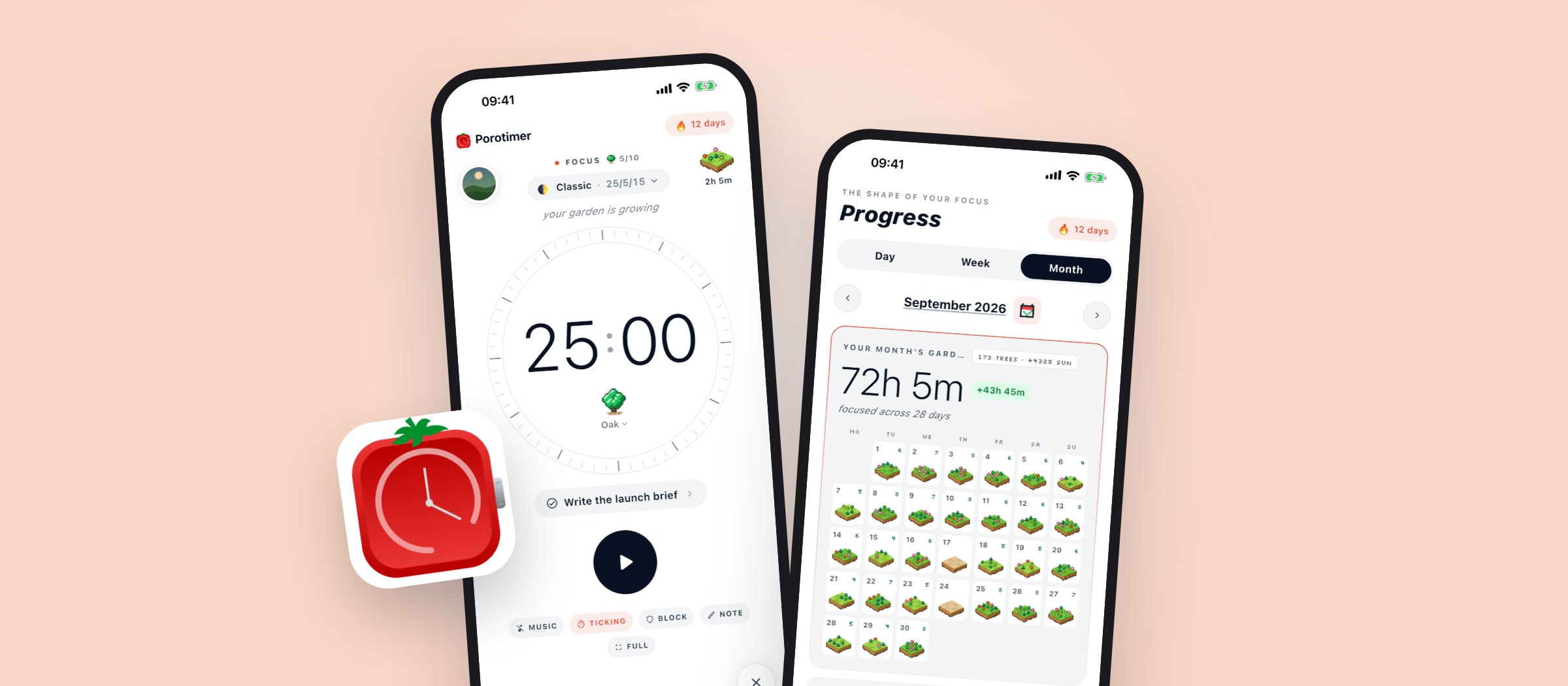
Every session plants a tree on your island, and the longer you focus, the bigger it grows. You choose what to plant and earn sun as you focus. Over a month your sessions add up to a whole garden, with a calendar view so you can see your streak day by day. It's a small thing, but it makes skipping a session feel like leaving a gap in the garden.
Flows: your rhythm, saved
A Flow saves your whole setup: focus, short break and long break lengths, plus your music, ticking and alarm. Porotimer comes with templates like Classic (25/5/15), Deep Work, Study, Writing and Quick Sprint, and you can make your own. Switching from "study mode" to "writing mode" becomes one tap.
Tasks you can press play on
Add your tasks, group them into projects, and tap play on any task to start a session on it. At the end of the day, the daily note shows what you actually finished, not just how long the timer ran.
Breaks that actually rest you
The break screen shows a calm scene with relaxing sounds, so your break doesn't turn into ten minutes of scrolling. Focus music and a gentle ticking sound keep playing even when the app is closed.
Keep the distractions out
During a session, Porotimer can block the apps you choose using Apple's Screen Time, or switch to an Allow List so only the apps you pick stay available. Your choices stay on your device.
Your timer, everywhere
A Live Activity puts the countdown on your Lock Screen and in the Dynamic Island, and Home Screen widgets show your timer, today's focus and your garden. Your sessions, tasks, notes and garden sync between iPhone and iPad.
A simple plan for your first week
- Day 1: Install Porotimer, keep the Classic Flow, and do just two pomodoros on one task.
- Days 2–3: Aim for four. Take every break, even when you feel like pushing on.
- Days 4–5: Add your tasks and press play on them instead of on the bare timer.
- Weekend: Look at your garden. Notice which time of day you focused best, and plan next week around it.
Porotimer is free on iPhone and iPad: you get the focus timer and this month's garden. Pro adds tasks and projects, daily notes, custom Flows and sounds, app blocking, rare trees and your full garden history.
The best focus system is the one you'll still be using next month. Start small, take your breaks, and let the garden grow.